Leadership


When the one who Leads is NOT a Leader…

…What do you do? How should you react? What should you say?

Most importantly, how do you help them be more of a leader when no true qualities of leadership seem to exist in their style? When their way of leading can only be easily digested with a heavy injection of Anesthesia.

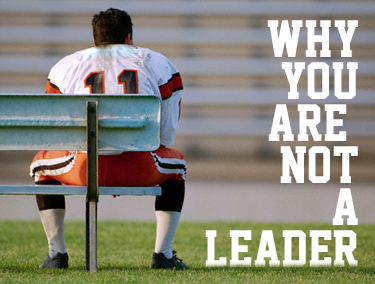
Just because you run an organization, manage a team or own a company does not make you a Leader

The answer to this title question is not an easy one, however it is one we must deal with on a daily basis!

When a Leader is the WRONG Leadership

Sadly anyone one can be considered a leader… all it takes is someone to follow.

How do you handle those that are “titled a leader” when they do not deserve it?


Keep the Performance Review, Trash the Bad Manager

Trash the performance reviewFor years there have been arguments for and against the performance review. There are many who diss the process, wanting to get rid of the actual review itself. There are others who feel it is a bedrock of information for both employee development, self checks, collecting historical data on the employee and as a way to evaluate the way a manager simply manages.

The performance review can be bad but it can also be great.

Idiots lay blame solely on a tool

if you lay blame on a tool, then that is what you are! There are valid reasons to blame your legacy system or the vendor platform you use to manage the reporting of performance. If you are an organization that can’t fork over the cash for a huge system, you may have problems with the process Bad Manager reviewsof implementing and getting the reviews turned in. But those who simply blame the tool or process are idiots.

It is my belief that if you had managers that were competent enough to do the job they were given, saw examples from their previous bosses, had recieved training, practice and the ability to manage their employees effectively (not just the person but also their development and performance), then you would not need the systems and deep processes. Those who blame tools are blaming band-aids for an injury rather than understanding why the injury is there in the first place.

A performance review can be bad

However the performance review is absolutely wrong if it is done only once or twice a year. This is because the all that happens within a review process is not all formal. You have to include informal talks, coaching and checks. It is not a question whether or not the review is done, but when and how often. But sadly, once detailed objectives are agreed upon and benchmarks given… that is when people usually wait until the next year to talk again.

Botome line: It’s not the review that is bad, it’s the approach and management around the review that is broken. I think many people fault a tool when they would rather not fix the person! Blaming tools is easy, fixing people is the tough part.

Those are my thoughts. What are yours? Ditch the performance review or fix the process and people around it?


Training Series: What you NEED to be an Effective Trainer. Part II

Training Series: Part IIThe following is continuing a series on topics regarding training and development.

I have been tackling the subject of Training over the last few weeks. You may have seen the post. If you need to catch up feel free to do so by reading Training Series: Calling yourself a TRAINER, doesn’t make you one (7/18/10) and Training Series: What you NEED to be an Effective Trainer. Part I – (7/26/10).

Here is Part II of “Becoming an Effective Trainer.”

6. Lay out and uncover the expectations – This is something that I don’t think many trainers, learning professionals, instructional designers and world renowned speakers do enough of. Many times those who are facilitating a subject just start right in. They begin with what they have in mind rather then ask about and uncover what the participants are expecting. There are individuals that will be in attendance that have been forced to come, are willing participants as well as those who saw a description but are in the wrong place with the wrong expectations for what may take place. If you do not ask peoples expectations, acknowledging that all the reasons they are there, then you may have problems. Those who have misconceptions will never feel you covered what they wanted. Others who are forced will never be fully engaged. By setting and asking those individuals their expectations you can clarify and get people on board for the activity that is to take place.

7. A chess like mentality – By this, I feel you need to have a sense of strategy. When you design a course you start out with the objectives and then scale back to the actual delivery.

8. Be aware of Logistics – A session is not just about showing up. It is about all the people who will be attending knowing where they are to be and what is to take place. It is about knowing where the exits and entrances are. Where to set-up, when and how you will give out handouts and supplemental materials. It is even about knowing when to take breaks and show people where the bathroom is. Know your surroundings. Understand that there may be some surprises. Have your presentations on a back-up flash drive. Send the files to your own email account. Be sure that the file formats you are creating are the same formats that are on the location you will be presenting at computer (i,e. there is a difference between Office 2003 and Office 2007).

9. Knowing that just because you know you messed up, doesn’t mean they know – This comes down to “never letting them see you sweat!” If you mess up, no one knows except you. The only way they will know if you tell them. So if you missed a slide, no big deal. If you said something too early, don’t worry. This is not to say that if you give incorrect instructions or technical information that you gloss over that. Admit those and make sure people understand the difference between your mistake and what is right. But don’t try to act like you are right in all situations. Someone will call you out.

10. Good intuition - It takes years to automatically know what to do in certain environments. How to handle tough participants and questions. A level of practice and expertise that will allow the one in front to deliver the right way in the wrong and right situations. After you have had enough practice in the trenches the intuition just comes. The best trainers and facilitators have this.

Are these characteristics you agree with? Is there anything to add (there always is)? Please feel free to leave them in the comments.


  • FOLLOW | SUBSCRIBE

    Enter your e-mail. Get latest from ReThinkHR directly to your inbox:


    Delivered by FeedBurner


  • The Author

    Grad with honors Benjamin McCall is an HR practitioner with specializations in Business Strategy, P&L, Change Management, OD, and Learning & Development. His passion for aligning the functions of HR with the strategies of business is evident through this blog where you will find his thoughts on the complexity of business and humanity around management, people, leadership, networking and his love for family and golf! It's about starting a conversation - so let's talk!
  • Twitter Feed

  • Check out HRM Today for all the latest in the online HR world
    Visit RecruitingBlogs.com
  • Copyright © 2009 ReThinkHR.org - All rights reserved
    iDream theme by Templates Next | Powered by WordPress
    AWSOM Powered